

Important Deadlines for the 2025 End of Financial Year

For businesses across New Zealand, the end of the financial year is less about closing the books and more about setting the next chapter. It is a chance to review the year’s results, tidy up the numbers, and make sure every detail is ready for the IRD. More importantly, it is the moment to see where you can improve, save, and plan for the year ahead.
When you know exactly what dates matter for the Financial Year NZ, it becomes easier to stay organised and avoid the pressure of last-minute work. You can prepare your accounts, confirm your tax position, and have time to seek advice before deadlines arrive. With a clear plan, these key dates turn from a source of stress into an opportunity to strengthen your business and keep it moving forward with confidence.
What Does the End of Financial Year Mean in New Zealand?
The financial year is a 12-month cycle that sets the timetable for when businesses must complete their accounting, tax, and financial reporting tasks. In New Zealand, it runs from 1 April 2025 to 31 March 2026 for most taxpayers. As the year comes to a close, it is time to update your accounts, prepare financial statements, and get ready for tax filing. Missing a key date can mean extra costs or missed opportunities to save.
By knowing these deadlines early, you can work through the process without the pressure of a last-minute rush. It allows you to reconcile accounts, review business performance, and get advice before submitting to the IRD. Whether you are self-employed or running a growing business, staying on top of the financial year timetable keeps you compliant and in control.
Key Dates & Deadlines 2025 – 2026
There are several important dates in the Financial Year NZ. Knowing them helps you plan ahead, avoid penalties, and keep your business running smoothly. Here are the key ones.
Start and Finish of the Financial Year
In New Zealand, the financial year is the set period for completing tax returns and other reporting. It runs for 12 months from April to March.
Key dates:
- End date (previous year): 31 March 2025
- Start date: 1 April 2025
- End date: 31 March 2026
Income Tax Return Filing Dates
In the Financial Year NZ, income tax returns must be filed by set deadlines to avoid penalties. The exact date depends on whether you file yourself or through a tax agent. Filing on time keeps your records current and your tax position clear.
1. Provisional Tax – Standard Option
The standard option is what Inland Revenue applies if you do not choose another method. It is based on your tax from the previous year, with a small increase to allow for growth. This total is then split into three equal payments across the year.
For businesses and individuals with a 31 March balance date, the payment timetable is:
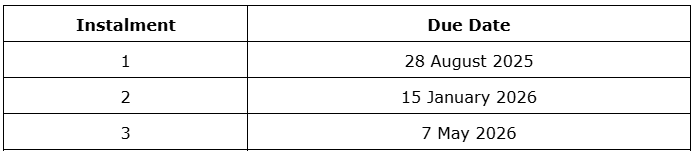
Paying on time means you stay clear of penalties and interest, and these amounts are credited towards your final income tax bill when your return is filed.
2. Estimation option
Businesses can avoid paying too much or too little in provisional income tax by using the estimation option. The dates and instalments for this option are identical to those for the regular option (check above).
3. Ratio option
The ratio option helps align your provisional tax payments with your business cash flow. You pay smaller amounts more frequently, rather than three fixed payments each year. The payments are based on a percentage of your GST-inclusive sales. This helps seasonal businesses or those with changing income. You pay more when sales are high and less when they drop.
For a 31 March balance date, the ratio option spreads payments over six instalments:
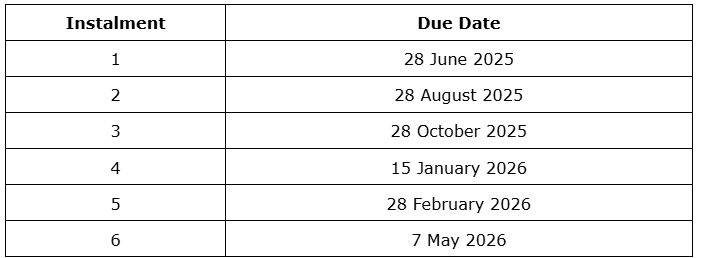
This method can smooth out your tax obligations, making it easier to manage cash flow throughout the financial year.
4. Accounting income method (AIM)
Firms using the AIM approach only pay taxes when they turn a profit. The provisional tax payment deadlines will coincide with your GST due dates if you select this option (check below).
GST Filing and Payment Deadlines
If your business is registered for GST, you can choose to file returns monthly, every two months, or every six months. The return and payment are normally due on the 28th of the month after your taxable period ends.
For example, if you file monthly, your January GST return and payment are due by 28 February. There are two exceptions:
- For the period ending 31 March, the due date is 7 May.
- For the period ending 30 November, the due date is 15 January.
Choosing the right filing frequency helps you manage cash flow. It keeps you on top of your obligations and reduces last-minute stress.
Terminal Tax Payment Dates
Terminal tax is the final payment that clears any remaining income tax for the year after provisional tax has been taken into account. The date you pay depends on whether you file your own return or use a tax agent.
For the 2025–2026 Financial Year NZ:
- 7 February 2027 – If you file your own return.
- 7 April 2027 – If you are linked to a registered tax agent.
Paying on time closes off your tax obligations for the year and helps you start the next financial year with a clean slate.
Employee Deduction Payment Dates
Your company must pay the New Zealand Inland Revenue Department if it has employees. The frequency and dates of payments vary according to the size of your company, but this is a year-round obligation:
- Small and medium-sized enterprises: every month, on the 20th day of the subsequent month
- Large companies should make two payments each month, the first by the 20th of the month and the second by the 5th of the subsequent month.
Stay Ahead of Deadlines with GECA Chartered Accountants
At GECA Chartered Accountants, we help businesses of every size stay on top of important IRD dates and make the most of available tax deductions. From income tax returns to GST and payroll obligations, we ensure nothing is missed. Understanding these timelines is not just about avoiding penalties. It is about using them to plan ahead, manage cash flow, and identify opportunities that can strengthen your business.
From sole traders to established companies, our team provides the same level of care and attention to detail. We focus on keeping accurate records, maximising deductions, and meeting all IRD requirements. With clear advice and timely support, we help you transition to stay organised, make informed decisions, and maintain a strong financial position throughout the year.
Ready to make the next Financial Year NZ your most organised yet? Let GECA Chartered Accountants handle the deadlines while you focus on running and growing your business. We bring clarity, confidence, and strategies that work. Book your FREE Strategic Discussion today and see how we can help you save time, claim more, and keep your business moving forward.